[RETRACTED] The Burden of Ventriculoperitoneal Shunt Complications: A Quest for Standardization
DOI:
https://doi.org/10.46900/apn.v8i2.345Keywords:
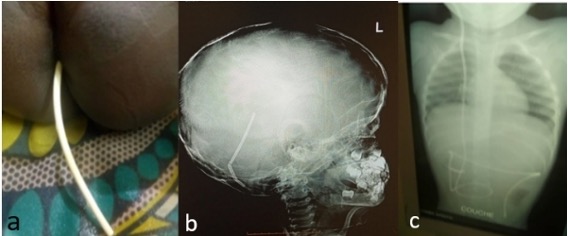
Protocol, preterm, severe malnutrition, trans-anal protrusion, infectionAbstract
Background: Ventriculoperitoneal shunt (VPS) placement is the main treatment for hydrocephalus, but infection and malfunction remain important concerns, particularly where standardized insertion protocols are limited. This study describes VPS-related complications after implementation of a standardized perioperative protocol in two Nigerian tertiary hospitals.
Methods: We conducted a prospective descriptive cohort study from December 1, 2023, to October 31, 2025. Consecutive patients with hydrocephalus requiring VPS were enrolled. The protocol included morning scheduling with neonatal priority, povidone-iodine skin preparation, prophylactic antibiotics, double gloving, minimal shunt handling, delayed shunt opening, and limited skin contact. Sociodemographic, clinical, radiologic, operative, and outcome data were analyzed descriptively. Early complications were defined as events occurring within 6 months after surgery.
Results: Ninety VPS procedures were performed in 87 patients; two were lost to follow-up. Median age was 4 years (IQR, 1–16; range, 0.08–43), and 62.1% were male. Non-communicating hydrocephalus was most common (64.4%), mainly due to congenital aqueductal stenosis. Overall complication rate was 3.33% (n=3), including two proximal obstructions and one transanal protrusion. The latter occurred in a premature, malnourished neonate who developed meningitis and died after revision, corresponding to an infection rate of 1.11% per procedure. Median hospital stay was 5 days (IQR, 4–6), and median follow-up was 4 months (range, 1–19).
Conclusions: A standardized VPS insertion protocol was associated with low complication and infection rates. However, causal inference is limited by the descriptive design and bundled intervention. Comparative studies with longer follow-up are needed.
Downloads
Downloads
Published
How to Cite
Issue
Section
License
Copyright (c) 2026 Emmanuel Garba Sunday, Eno-Abasi Sunday

This work is licensed under a Creative Commons Attribution 4.0 International License.

When publishing in Archives of Pediatric Neurosurgery journal, authors retain the copyright of their article and agree to license their work using a Creative Commons Attribution 4.0 International Public License (CC BY 4.0), thereby accepting the terms and conditions of this license (https://creativecommons.org/licenses/by/4.0/legalcode).
The CC BY 4.0 license terms applies to both readers and the publisher and allows them to: share (copy and redistribute in any medium or format) and adapt (remix, transform, and build upon) the article for any purpose, even commercially, provided that appropriate credit is given to the authors and the journal in which the article was published.
Authors grant Archives of Pediatric Neurosurgery the right to first publish the article and identify itself as the original publisher. Under the terms of the CC BY 4.0 license, authors allow the journal to distribute the article in third party databases, as long as its original authors and citation details are identified.