Long-term Results of Stereotactic Radiofrequency Surgery for Aggressive Behavioral in Obsessive-Compulsive Adolescent – A 10-Year Follow-up Case Report
DOI:
https://doi.org/10.46900/apn.v8i2.324Keywords:
Aggressive behavior, Radiofrequency, Obsessive-compulsive disorder, Stereotactic ablationAbstract
Introduction: Aggressive and self-injurious behaviors associated with obsessive-compulsive disorder in patients with intellectual disability represent a major therapeutic challenge, particularly in cases refractory to pharmacological and behavioral treatment. In this context, stereotactic neurosurgery has been considered a last-resort option, targeting limbic and paralimbic circuits involved in emotional and behavioral regulation.
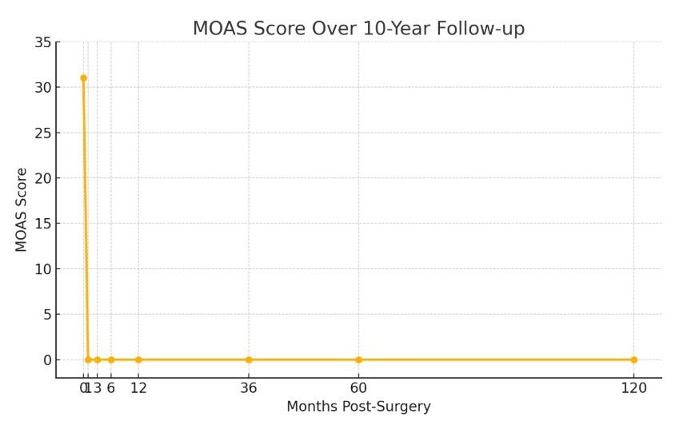
Case Report: We report the case of a 17-year-old male with pharmacological resistant obsessive-compulsive disorder and severe mental retardation, with a 9-year history of refractory aggressive behavior, who underwent stereotactic neurosurgical intervention in 2006. Preoperatively, the patient exhibited high levels of aggression (MOAS score: 31). Postoperatively, there was a complete and sustained remission of aggressive episodes, with MOAS scores of 0 at all follow-up intervals up to 10 years. The patient also experienced marked improvement in obsessive-compulsive symptoms, reduction in psychotropic medications, and significant enhancement in attention, concentration, quality of life, and family satisfaction. One wound infection was reported postoperatively, with no lasting adverse effects.
Conclusion: This case highlights the potential for stereotactic lesioning to induce profound and durable behavioral improvements in select patients with treatment-refractory aggression.
Downloads
Published
How to Cite
Issue
Section
License
Copyright (c) 2026 Walter Fagundes, Rodolpho Albuquerque Souza, Ricardo Santos de Oliveira, Sergio Dantas

This work is licensed under a Creative Commons Attribution 4.0 International License.

When publishing in Archives of Pediatric Neurosurgery journal, authors retain the copyright of their article and agree to license their work using a Creative Commons Attribution 4.0 International Public License (CC BY 4.0), thereby accepting the terms and conditions of this license (https://creativecommons.org/licenses/by/4.0/legalcode).
The CC BY 4.0 license terms applies to both readers and the publisher and allows them to: share (copy and redistribute in any medium or format) and adapt (remix, transform, and build upon) the article for any purpose, even commercially, provided that appropriate credit is given to the authors and the journal in which the article was published.
Authors grant Archives of Pediatric Neurosurgery the right to first publish the article and identify itself as the original publisher. Under the terms of the CC BY 4.0 license, authors allow the journal to distribute the article in third party databases, as long as its original authors and citation details are identified.